
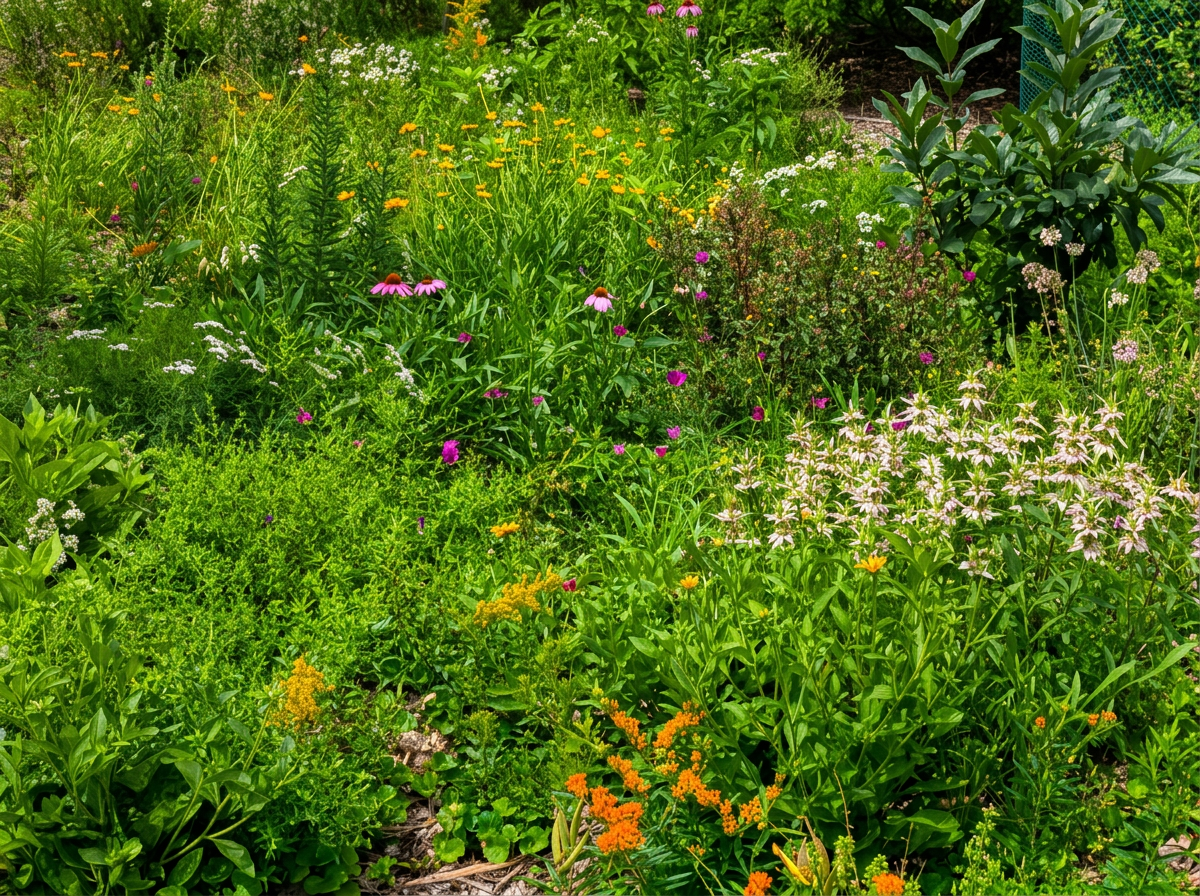
Herbal Allies: A Living Herbalism Apprenticeship
Meet the plants. Make medicine. Become part of the living world around you.
Plant Allies
A Living Herbalism Apprenticeship
Plant Allies is a year-long herbalism program for people who want more than a list of herbs and their uses.
Together, we will learn to recognize plants as living teachers, ecological community members, sources of nourishment, and potential partners in our everyday lives.
You will meet plants firsthand, visit them through the seasons, learn how they grow, discover the wildlife and landscapes they support, and practice turning them into teas, tinctures, oils, salves, syrups, vinegars, and other preparations.
This is not about memorizing hundreds of remedies.
It is about building lasting relationships with a smaller circle of plants you truly know.
Enrollment is now open for the founding cohort.
[JOIN THE FOUNDING COHORT]
Herbalism Begins With Relationship
Many herbal courses begin with symptoms:
What should I take for sleep?
What herb helps digestion?
What is good for stress?
Plant Allies begins somewhere deeper:
Who is this plant?
Where does it live?
What does it need?
What other beings depend on it?
How has it lived alongside people?
What happens when you taste it, grow it, prepare it, and return to visit it again and again?
Each month, we will slow down and spend meaningful time with a small group of plant allies. You will learn their traditional uses and modern research, but you will also meet them in gardens, fields, forests, kitchens, and your own body.
By the end of the program, you will not simply recognize their names.
You will know them.
What You Will Learn
Build a Foundation in Everyday Herbalism
We will begin with nourishing and broadly accessible herbs that can become part of everyday life.
You will learn how to work with plants through food, tea, long infusions, topical preparations, and other gentle approaches before moving into more concentrated forms.
Lessons will include:
Herbal actions and energetics
Taste as a tool for understanding plants
Basic human physiology
Traditional uses and current research
Dosage, preparation, and responsible use
Safety, contraindications, and medication interactions
How to evaluate herbal information critically
This program is educational and is not a replacement for individualized medical care.
Learn to Make Herbal Preparations
Throughout the year, you will build practical medicine-making skills through guided demonstrations and hands-on projects.
Preparations may include:
Herbal teas and nourishing infusions
Decoctions
Alcohol tinctures
Glycerites and vinegars
Herbal honeys
Oxymels
Infused oils
Salves and balms
Syrups
Powders and electuaries
Bitters
Simple formulas
You will finish the program with a small home apothecary and the knowledge to continue creating your own preparations responsibly.
Understand the Ecology of Every Plant
A medicinal plant is never only an ingredient.
Every plant belongs to a place and participates in a community.
For each featured plant, we will explore:
Native range and habitat
Soil, moisture, and light preferences
Seasonal growth and reproduction
Pollinator and wildlife relationships
Successional role
Cultivation and propagation
Ethical harvesting
Threats from habitat loss and overharvesting
When growing a plant is more appropriate than gathering it from the wild
You will learn not only how plants may care for people, but how people can care for the plants in return.
A Year of Meeting the Plants
The curriculum follows the seasons so that we can encounter plants as they emerge, flower, fruit, set seed, and return to dormancy.
Spring: Awakening and Renewal
Meet the plants that arrive early, restore nourishment, and help us reconnect with the fresh growth of the year.
Possible plant allies include:
Violet, chickweed, dandelion, cleavers, nettle, plantain, raspberry leaf, and spring tonics.
Summer: Vitality and Abundance
Explore aromatic, flowering, and pollinator-supporting plants at the height of the growing season.
Possible plant allies include:
Lemon balm, tulsi, bee balm, calendula, yarrow, rose, mountain mint, skullcap, and milky oats.
Autumn: Roots, Fruits, and Resilience
Work with berries, seeds, roots, and plants traditionally associated with protection and seasonal transition.
Possible plant allies include:
Goldenrod, elderberry, hawthorn, rose hips, burdock, spicebush, and nourishing roots.
Winter: Rest, Reflection, and the Home Apothecary
Turn inward to study formulation, conifers, barks, dried herbs, stored medicines, and the deeper principles that connect the plants you have met.
Possible plant allies include:
Linden, pine, spruce, birch, ginger, marshmallow, and your own personalized allies.
The final plant list will reflect seasonal availability, regional ecology, and responsible sourcing.
Discover Your Personal Plant Allies
Not every person needs the same relationship with the same plants.
As the year progresses, you will begin noticing which plants repeatedly draw your attention, suit your constitution, fit your landscape, or support the areas of life you want to tend more carefully.
Partway through the program, you will receive guidance in choosing a smaller group of personal plant allies for deeper study.
You may be invited to:
Spend regular time with them
Grow or responsibly source them
Prepare them in several different ways
Research their history and ecology
Track your experiences in a plant journal
Create a personal formula or ritual
Develop a stewardship practice that supports them
This is not a promise that one plant will solve every problem.
It is an invitation to develop discernment, curiosity, attention, and reciprocity.
What Is Included
Your year-long apprenticeship includes:
Monthly Live Classes
A live online class introducing the month’s plants, herbal concepts, ecology, safety information, and medicine-making practice.
Recordings will be available for enrolled students who cannot attend live.
Plant Relationship Practices
Guided invitations to observe, taste, grow, draw, photograph, journal about, or spend time with the featured plants.
Seasonal Field Experiences
Optional in-person plant walks, garden gatherings, harvesting demonstrations, and medicine-making days in the greater Philadelphia region.
Exact dates and locations will be announced in advance.
Medicine-Making Demonstrations
Step-by-step guidance for creating herbal preparations at home, including sourcing, sanitation, storage, labeling, shelf life, and responsible use.
Downloadable Plant Profiles
Each profile will bring together:
Identification
Habitat and ecology
Traditional uses
Current research
Preparation methods
Safety considerations
Cultivation guidance
Reflection prompts
Community Gathering Space
A private space to share plant observations, ask questions, post photographs, compare preparations, and learn alongside the cohort.
Personalized Plant Ally Guidance
Support choosing a smaller group of plants for deeper relationship and continued study.
Founding Cohort Access
Founding students will help shape the future of the program and receive opportunities to provide feedback throughout the year.
What Makes This Program Different?
Relationship Before Consumption
You will be encouraged to meet and understand a plant before treating it as a product.
Ecology Is Part of Herbalism
We will study plants within their habitats, relationships, and seasonal cycles rather than separating medicine from the living world.
Depth Over Memorization
Instead of racing through an enormous materia medica, we will return to foundational plants repeatedly and learn them through multiple senses and methods.
Science and Tradition in Conversation
We will explore traditional knowledge, historical use, lived experience, plant chemistry, and modern research without pretending that any one source tells the whole story.
Stewardship and Reciprocity
Whenever we gather, grow, purchase, or prepare a plant, we will ask what responsibility comes with that relationship.
This Program May Be for You If…
You want to learn herbalism but feel overwhelmed by where to begin.
You already love plants and want to understand their medicinal traditions.
You want practical skills without reducing plants to symptom-based remedies.
You enjoy learning through observation, experience, discussion, and making things with your hands.
You want to know the ecological role of the plants you use.
You want a slower, seasonal learning experience rather than a self-paced course you may never finish.
You are interested in building a thoughtful home apothecary.
You want to become more attentive, capable, and connected to the land around you.
You Do Not Need…
You do not need previous herbal training.
You do not need to live in the countryside.
You do not need to know how to identify plants yet.
You do not need a garden.
You do not need to purchase every herb or make every preparation.
You only need curiosity, a willingness to observe carefully, and a desire to build a more reciprocal relationship with plants.
Program Format
Length: 12 months
Format: Live online classes, recordings, community discussion, independent plant practices, and optional in-person experiences
Location: Online, with optional gatherings in the greater Philadelphia region
Time commitment: Approximately 3–5 hours each month, with additional optional time for field observation and medicine making
Experience level: Beginner-friendly, with enough depth for gardeners, land stewards, and people with some herbal experience
Founding cohort begins: [MONTH AND DATE]
Founding Cohort Tuition
Monthly Enrollment
$[AMOUNT] per month for 12 months
Includes the complete curriculum, live classes, recordings, plant profiles, community access, and personalized plant ally guidance.
[ENROLL MONTHLY]
Pay in Full
$[AMOUNT] for the full year
Save $[AMOUNT] by enrolling for the full apprenticeship.
[ENROLL FOR THE YEAR]
Herbs, jars, alcohol, oils, and other medicine-making materials are not included unless specifically stated for an individual gathering or optional kit.
A limited number of reduced-cost spaces may be available. Details will be shared before enrollment closes.
About Your Guide
Tyler Kruszewski
Founder of Reviving Wisdom
Tyler is an ecological designer, restoration practitioner, herbalist, educator, and lifelong student of the relationships between people, plants, and place.
Through Reviving Wisdom, Tyler helps people transform lawns and degraded landscapes into thriving habitat, learn the plants growing around them, and become active participants in the ecosystems they inhabit.
Plant Allies brings together ecological restoration, practical herbalism, seasonal observation, plant folklore, medicine making, and the belief that knowledge becomes meaningful when it is rooted in relationship.
Frequently Asked Questions
Is this a certification program?
The founding cohort is an educational apprenticeship and does not provide a license to diagnose, prescribe, or practice medicine.
Students will receive a certificate of completion documenting their participation and coursework.
Will we forage wild plants?
Responsible wild plant observation and harvesting may be discussed or demonstrated, but harvesting will never be required.
Some plants are abundant and appropriate to gather in certain settings. Others should be cultivated, purchased from responsible growers, or left entirely undisturbed.
Do I need to attend every class live?
No. Classes will be recorded, although attending live will allow you to participate in discussion and ask questions.
Will the program tell me which herbs to take for a medical condition?
The course will teach herbal traditions, preparations, safety principles, and frameworks for understanding plants.
It does not provide medical diagnosis or individualized treatment. Participants with health conditions, allergies, pregnancy considerations, or prescription medications should consult a qualified healthcare professional before using unfamiliar herbs.
Is this only about native plants?
No.
We will work with a combination of native, naturalized, cultivated, and globally significant medicinal plants. Their origins and ecological impacts will always be discussed clearly.
Do I need to buy special equipment?
Most preparations can be made with ordinary kitchen equipment and a few jars, strainers, and bottles.
A complete suggested materials list will be provided before the program begins.
Can I join from outside Pennsylvania?
Yes. The core program is online.
Because local ecology varies, students outside the region will be encouraged to research and meet related plants that grow responsibly in their own landscapes.
Become Part of the Founding Cohort
There is a difference between knowing what a plant is called and knowing it as a neighbor.
Over the course of one year, you will learn to identify plants, understand their habitats, prepare them responsibly, listen to your own experience, and participate more consciously in the communities that sustain them.
You will leave with practical medicine-making skills.
You will leave with a growing home apothecary.
Most importantly, you will leave with relationships that can continue for the rest of your life.
Founding cohort enrollment closes [DATE].
[JOIN PLANT ALLIES]
Questions about the program?
Email [EMAIL ADDRESS].
Plant Allies is an educational program. Information shared through the program is not intended to diagnose, treat, cure, or prevent disease and is not a substitute for care from a qualified medical professional.
What You’ll Receive
Weekly Coaching
Bring your projects, questions, and challenges and receive live guidance.
Ecological Skills
Native plant community design, site assesment, invasive management, and ecological restoration.

Seasonal Guidance
Practical support to prioritize, strategize, and manage projects throughout the seasons
Community
Learn alongside others while sharing laughs, lessons learned, wisdom, and inspiration
This mentorship is for you if any one of these resonate:
You're creating a native garden
You're restoring ecological health
You're learning plant identification
You’re a professional educator or nature worker
You’re interested in foraging and growing your own food
You want guidance from an experienced practitioner
You like to cultivate a deep relationship with the natural world